Fence Staining in Tulsa
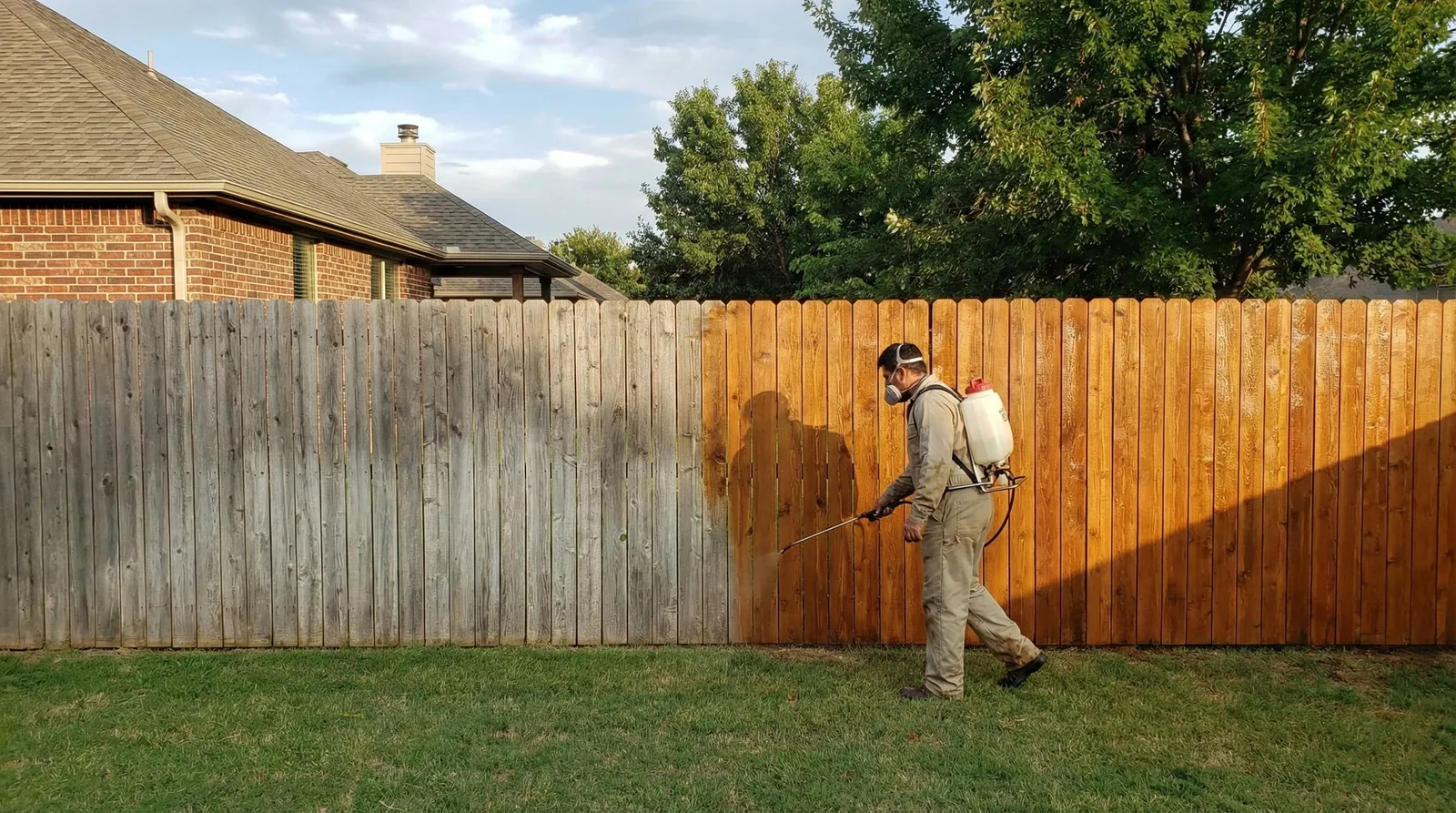
Request an Estimate (918) 918-4647Your fence looked great when it went up. A year or two later, not so much. The sun bleached the color. Rain and humidity started the grey process. The boards that were honey-colored are now weathered and tired looking.
This is what happens to bare wood in Oklahoma. Intense sun, spring rain, humidity, temperature swings. Unprotected wood ages fast.
Staining changes that equation. It adds color if you want it, but more importantly it adds protection. The stain creates a barrier that blocks UV damage, repels moisture, and slows the aging process. A stained fence can look good years longer than one left bare.
We stain fences throughout Tulsa. New installations and existing fences. Whether you want to preserve fresh wood or bring a weathered fence back to life, we have the products and experience to make it happen.
What's Included
Fence staining service covers:
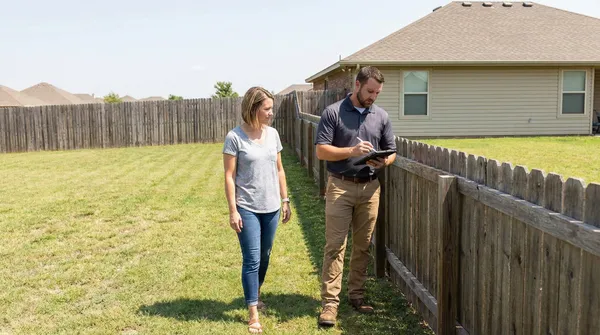
- We look at your fence and figure out what it needs
- Product recommendation based on your fence and the look you want
- Surface prep including cleaning and minor repairs
- Power washing to get dirt, debris, and old coating off
- Drying time before we stain
- Stain applied properly for your fence style
- Even coverage on all surfaces
- Cleanup
- We tell you how to maintain the finish
Good staining requires good preparation. We do the work right so the finish lasts.
Options and Materials
Stain products offer different options:
Semi-Transparent
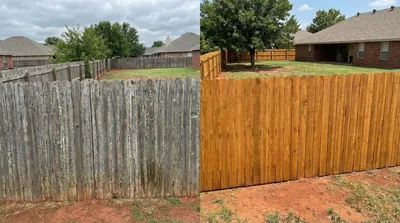
Wood grain shows through. Adds color and protection while keeping the natural look. Popular choice.
Solid Stain
Opaque color like paint but penetrates like stain. Good for covering imperfections or getting consistent color across old and new boards.
Clear Sealer
Protection without color. Keeps the natural appearance while blocking moisture and UV. Works well on new cedar you want to keep looking fresh.
Oil-Based versus Water-Based
Oil-based penetrates deeply and protects well but takes longer to dry. Water-based dries faster and cleans up easier. Both work with proper application.
Colors
Natural wood tones to grays to whatever you want. We help you pick colors that work with your home and landscape.
We recommend products that hold up in Oklahoma conditions. Cheap stain needs reapplication sooner. Quality costs more upfront but saves over time.
The FenceBee Process
Fence staining works like this:
- 1
Assessment
We look at your fence condition, any previous coatings, and talk about what you want for appearance and protection.
- 2
Product Selection
Based on assessment, we recommend stain type, opacity, and color. You see samples and make the call.
- 3
Quote
You get a price covering prep, materials, and application. Everything included.
- 4
Weather and Scheduling
We schedule based on forecast. Staining needs dry weather before, during, and after application.
- 5
Prep
We clean the fence, usually power wash, and fix any minor issues. Surface has to be clean and dry for stain to stick.
- 6
Application
We apply stain using methods that work for your fence style. Even coverage everywhere.
- 7
Done
After drying, we inspect and give you care instructions for maintaining the finish.
Timelines and Scheduling
Staining typically takes 1-2 days depending on fence size. That includes power washing, drying, and application. Bigger properties take longer.
Weather matters a lot. We need dry conditions for prep and application, plus 24-48 hours of dry weather afterward. Oklahoma spring and fall often work well. Summer heat works too if managed carefully.
Scheduling usually runs 1-2 weeks after you approve the estimate. Weather windows may require flexibility on both sides.
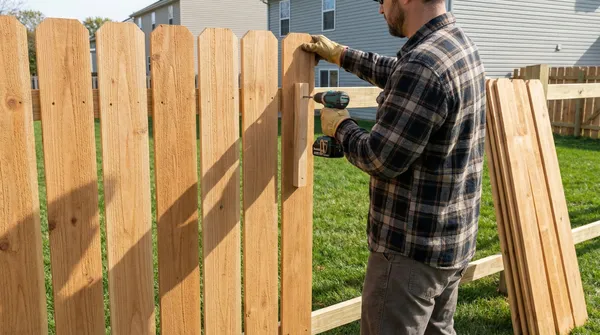
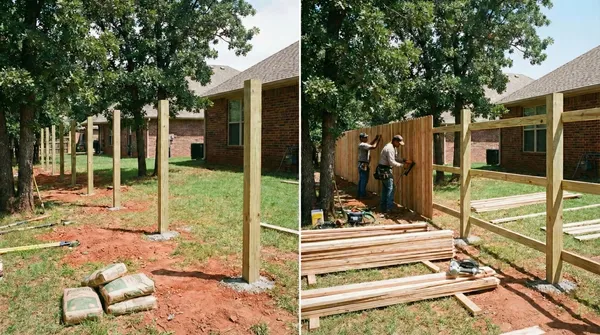
For new fences, wait 2-4 weeks after installation before staining. Fresh lumber contains moisture that prevents proper stain penetration. Patience here pays off.
Pricing Factors
What affects staining cost:
- Linear feet and height of fence
- Current condition and how much prep is needed
- Product quality and type
- Number of coats required
- Fence style: solid boards versus pickets
- Access to all fence surfaces
- Any repairs needed beforehand
Staining costs less than replacement and extends fence life significantly. Think of it as protective maintenance, not optional cosmetics.
Tulsa-Specific Considerations
Oklahoma conditions make staining valuable. Summer sun damages bare wood fast. Spring rains promote rot. Temperature swings stress surfaces. Stain addresses all of that.
We use products that work here. Not all stains perform equally in our climate.
New fences need time before staining. Fresh lumber carries moisture that interferes with stain. Waiting 2-4 weeks allows proper drying. We check moisture levels if there is any question.
Previously stained fences may need extra prep. Peeling old stain has to come off before new application. Old stain in good condition can be cleaned and recoated.
Frequently Asked Questions
How often should I stain?
Typically every 2-3 years in Oklahoma. Sun exposure, weather, and stain quality affect frequency. Signs you need restaining: fading color, water no longer beading, grayish wood appearance.
Can you stain over old stain?
Usually yes if the old stain is in decent shape. We clean and recoat. If old stain is peeling or failing, more prep is needed. We assess during consultation.
What color should I pick?
Consider your home exterior and landscape. Natural wood tones are classic. Darker stains show weathering less between coats. We provide samples to help you decide.
Can you stain right after installation?
We recommend waiting 2-4 weeks. Fresh lumber contains moisture that prevents good stain penetration. Patience produces better, longer-lasting results.
Stain versus paint?
Paint sits on top. Stain penetrates. Stain lets wood grain show and flexes with the wood, reducing peeling. Paint provides solid coverage but can peel as wood expands and contracts.
Related Services
Why Choose FenceBee?
Clear, Professional Process
From first call to final walkthrough, you know what to expect at every step.
Respect for Your Property
We treat your yard like our own, with thorough cleanup after every job.
Straightforward Communication
No surprises, no jargon. Just honest answers and clear timelines.
Workmanship You Can Trust
Skilled crews with years of hands-on fencing experience.
Ready to Get Started?
Protect your fence investment with staining. Reach out for a consultation. We assess your fence, recommend products, and give you a clear estimate for staining that looks good and lasts.