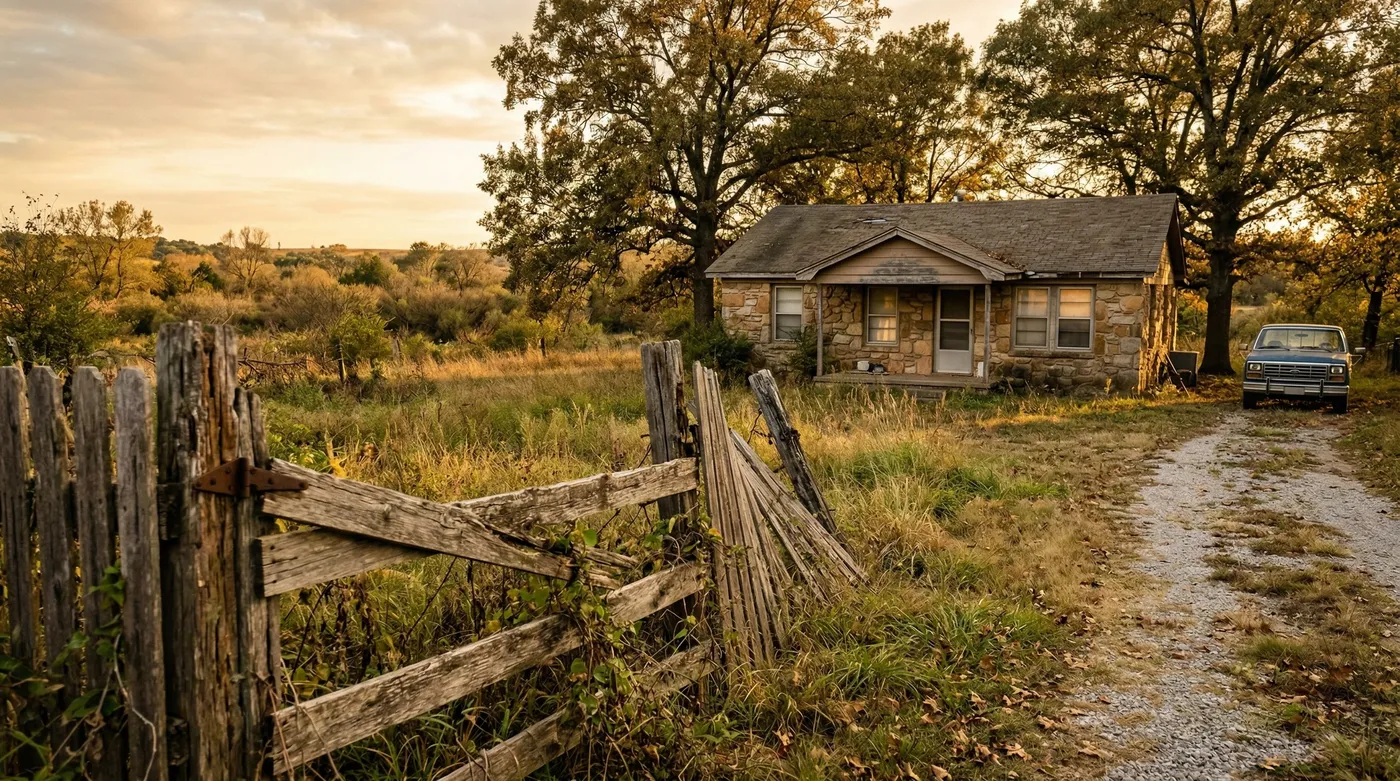
When her grandmother died, nobody wanted the house.
The estate was built in the 80's. Next to an old farm on the edge of Bixby by Haikey Creek. Fence falling apart.
She took it because she couldn't afford to say no.
The first few weeks were just cleaning. Hauling bags to the curb. Sorting through a life that fit into a three-bedroom house and still felt like too much to carry. Her grandmother had kept everything. Receipts from 1987. Church bulletins. Rubber bands around rubber bands.
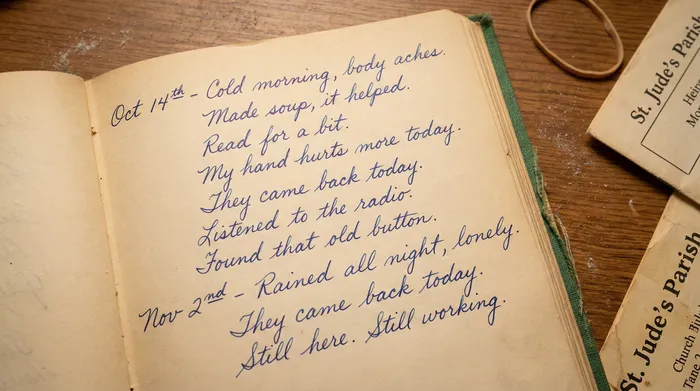
In the back of the bedroom closet, behind a box of Christmas ornaments that hadn't been opened in a decade, she found a journal. Small. Green cover. Water stain on the front.
Most of it was what you'd expect. Grocery lists. Doctor appointments. "Call Linda about the casserole dish." Normal things from a normal woman who lived a quiet life on a street nobody drove down on purpose.
But in the back pages, the handwriting changed. Got smaller. Shakier. And the entries stopped being about groceries.
The same line, repeated on page after page:
They came back today.
No context. No explanation. Just that line, written over and over across weeks, maybe months. Some entries had a date. Some didn't. One just said:
Still here. Still working.
She asked her mother about it. Her mother didn't know. Asked her aunt, her uncle, the woman from church who'd known her grandmother forty years. Nobody knew what she was writing about. Nobody remembered her keeping a diary at all.
It sat with her. The kind of thing you think about at 2 AM when you can't sleep. Who was "they"? What kept coming back? Why did it matter enough to write down but not enough to tell anyone?
She let it go. She had a house to deal with.
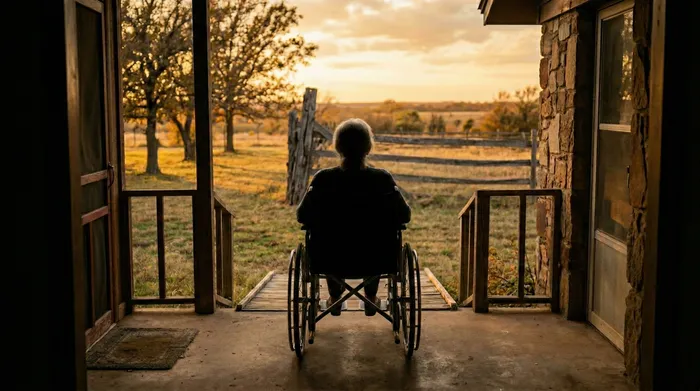
The last year of her grandmother's life had been hard. She'd stopped talking near the end. Not all at once. First the long stories disappeared. Then the short ones. Then it was just words here and there, then sounds, then nothing. She'd sit in her wheelchair and look at you with eyes that still had everything in them but no way to get it out.
The only thing she ever asked for, the one thing the caretaker said she'd get agitated about, was going outside. Every afternoon. Same time. The caretaker would wheel her to the back porch, facing the yard, and her grandmother would sit there and stare at the fence line. Not the yard. Not the sky. The fence. For an hour sometimes. Hands folded in her lap, eyes fixed on that back fence like she was waiting for someone.
The caretaker told her about it after the funeral. Said she thought it was just the dementia. "But she was so peaceful out there. Whatever she was looking at, it made her happy. I just let her be."
She didn't think much of it then. She had too much else to carry.
She started on the backyard because that's where the worst damage was. The fence was leaning, posts rotted at the base, whole sections pulling away from the rails. She decided to tear it out herself because the quotes she got were more than her car payment.
She learned as she went. Trial and error. Broke a post. Set one crooked. Pulled it out and replaced the posts. Now it was strong, over engineered. Drove to the hardware store so many times the guy at the register stopped asking if she needed help finding anything.
Her daughter came with her most days. Six years old. Too young to help and too stubborn to stay inside. She'd sit in the grass and draw in her sketchbook while her mother worked. Quiet for once. Something about that backyard settled her in a way nothing else did.
Somewhere in the second week, a neighbor asked if she could fix his gate. She said she wasn't a fence company. He said he didn't care, he just needed someone who'd actually show up. She fixed his gate. Welded a frame that never sagged. He told his neighbor. That neighbor had a whole section down. She rebuilt it. Stronger, better.
She didn't plan any of it.
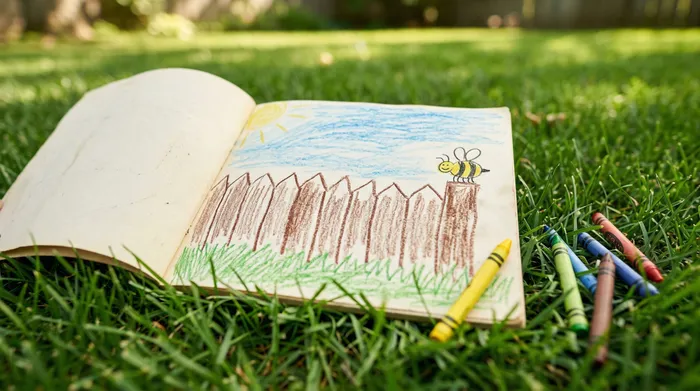
One afternoon she came inside, covered in dirt and sweat, and her daughter was at the kitchen table, sketchbook open, working on something with the kind of focus that usually meant she was about to ask for a snack and pretend she didn't hear you the first three times.
She glanced at the page. A drawing of the backyard. The fence. The grass. And something small on the corner post.
She flipped back a page. Another drawing. The fence again. The same small thing on the post.
She flipped back further. Page after page. Every single drawing her daughter had done in that backyard had the fence in it. And every single one had the same thing on it. Small, near the post or sitting on the rail or tucked into one of the holes in the old cedar.
She hadn't noticed. She'd been too busy tearing out rotten boards and setting new posts to look at what her daughter had been drawing ten feet away from her for weeks.
"Baby, what is this?" She pointed at the small thing on the post.
Her daughter looked at her like she'd asked what color the sky was.
"That's the fence bee, Mama."
Said it like a fact. Like a thing that had always had a name and her mother was the last person to learn it.
"The what?"
"The fence bee. He lives in Granny's post. He comes every day."
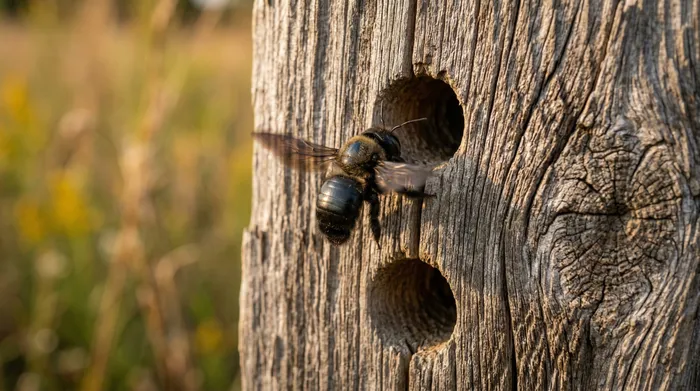
She walked outside. The old corner post. The one original post she'd kept because it was still solid, cemented deep. She'd built the entire new fence off that one post.
It was full of small, clean, perfectly round holes running up the sides. And something was moving in and out of them. Carpenter bees. Hovering at the entrance, landing on the rail, crawling into the wood and disappearing.
Coming back. Every day. To the same post.
She thought about the journal. They came back today. Still here. Still working.
She thought about the caretaker. She'd just stare at the fence line. Whatever she was looking at, it made her happy.
She thought about her grandmother, sitting on that porch in her wheelchair, unable to speak, unable to explain, watching the only thing that still came to visit her every single afternoon. Not a person. Not a memory. Just a small, quiet thing with wings that landed on a fence post and went to work and came back the next day and did it again.
Her grandmother couldn't tell anyone what she was watching. So she wrote it down until she couldn't write anymore. And then she just watched.
And her daughter, six years old, sitting in the same grass in the same backyard a generation later, had seen the same thing. Drawn it. Named it. Like it was handed to her.
Three women. Same backyard. Same fence post.
Her grandmother watched them because at the end, when everything else left, they didn't. They came back. Every day. To the same post, the same fence, the same quiet corner of a yard that nobody else paid attention to.
Her daughter named it because children don't overthink what's right in front of them.
She built a company around it because she finally understood what her grandmother had been trying to say.
The fence bee.
Still here. Still working.